
IranShahr Terminal
Imam Khomeini International AirportTehran, Iran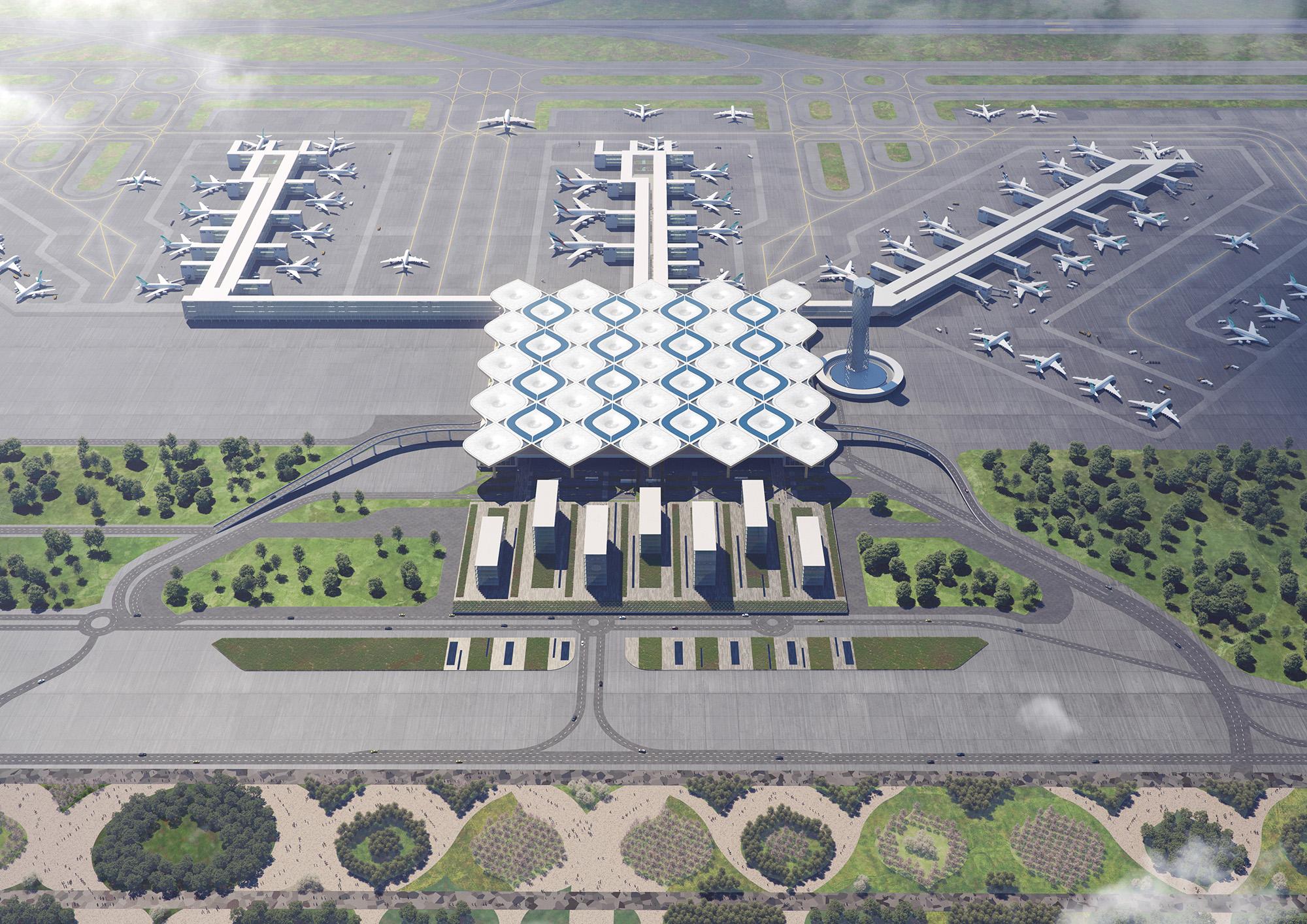
Shortlisted proposal from Hadi Teherani Architects for Iranshahr Terminal at Tehran Imam Khomeini International Airport
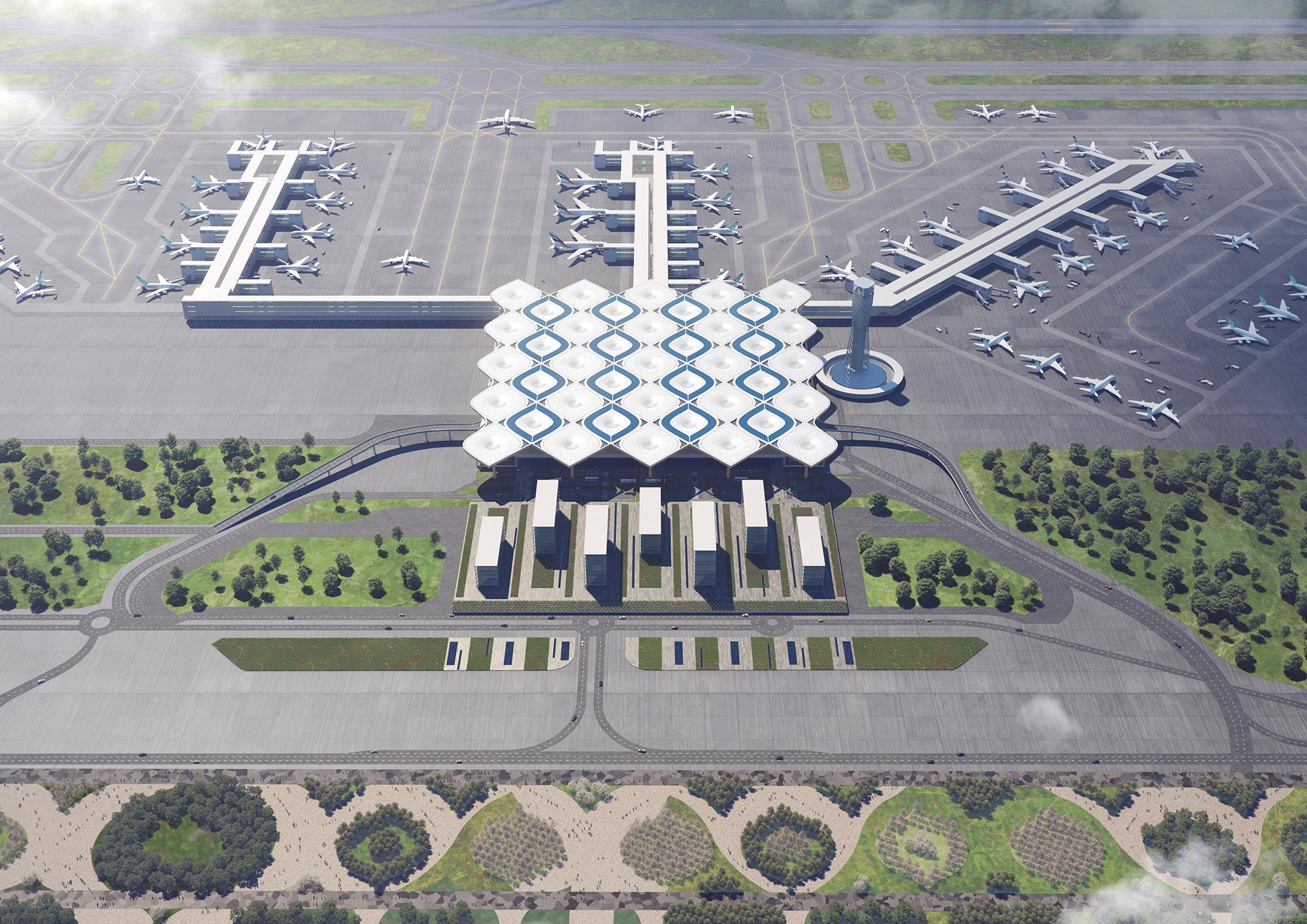
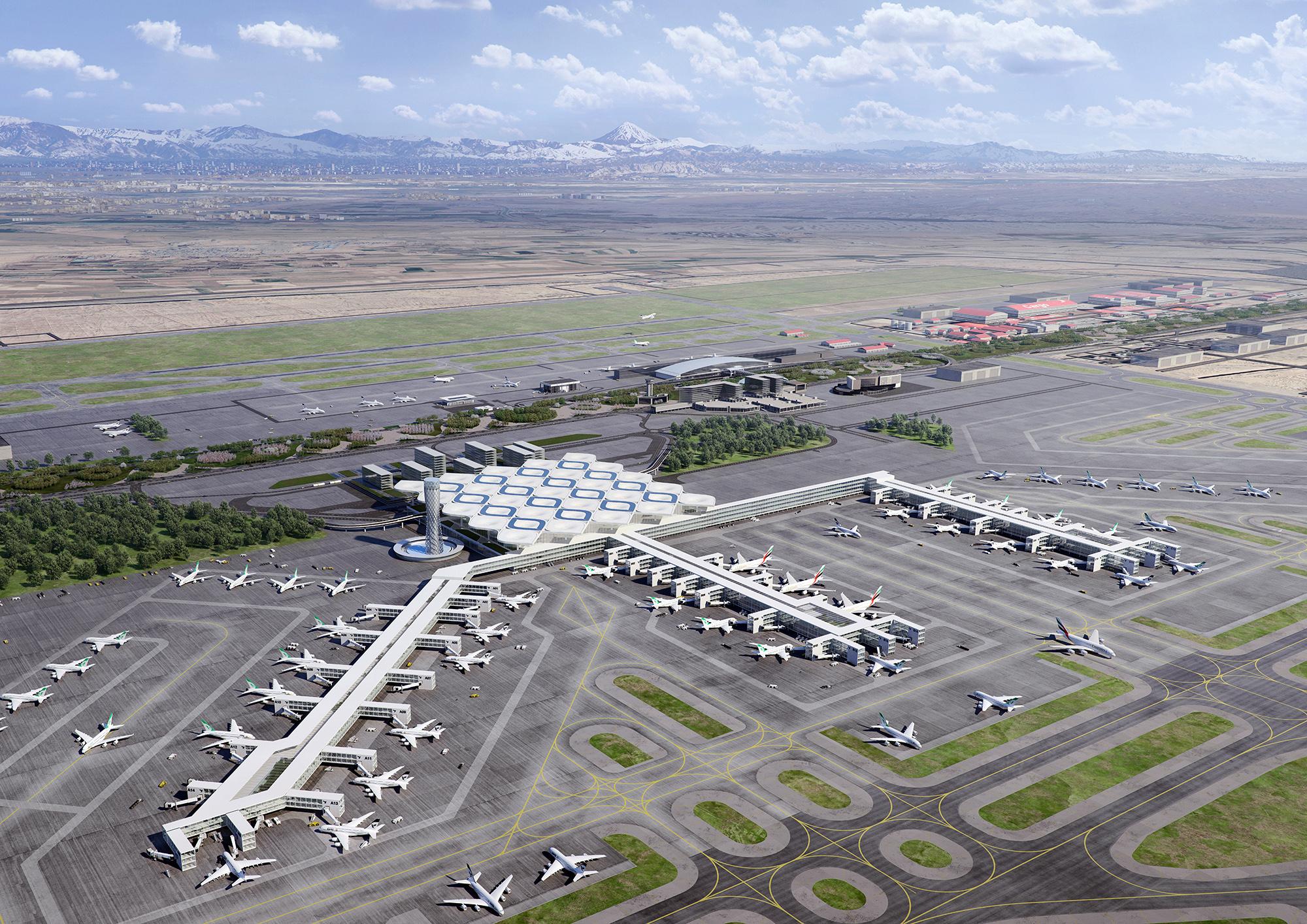
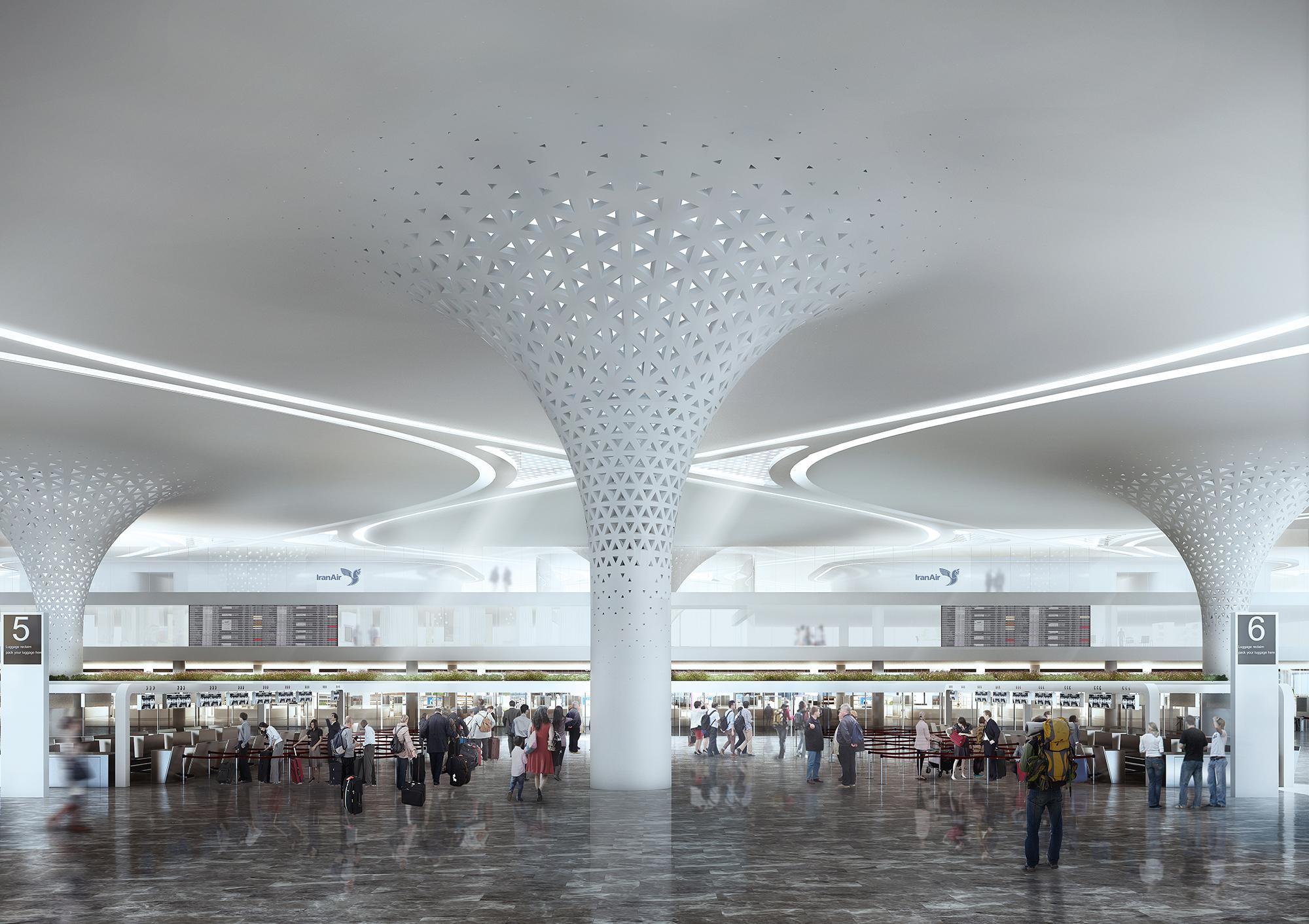
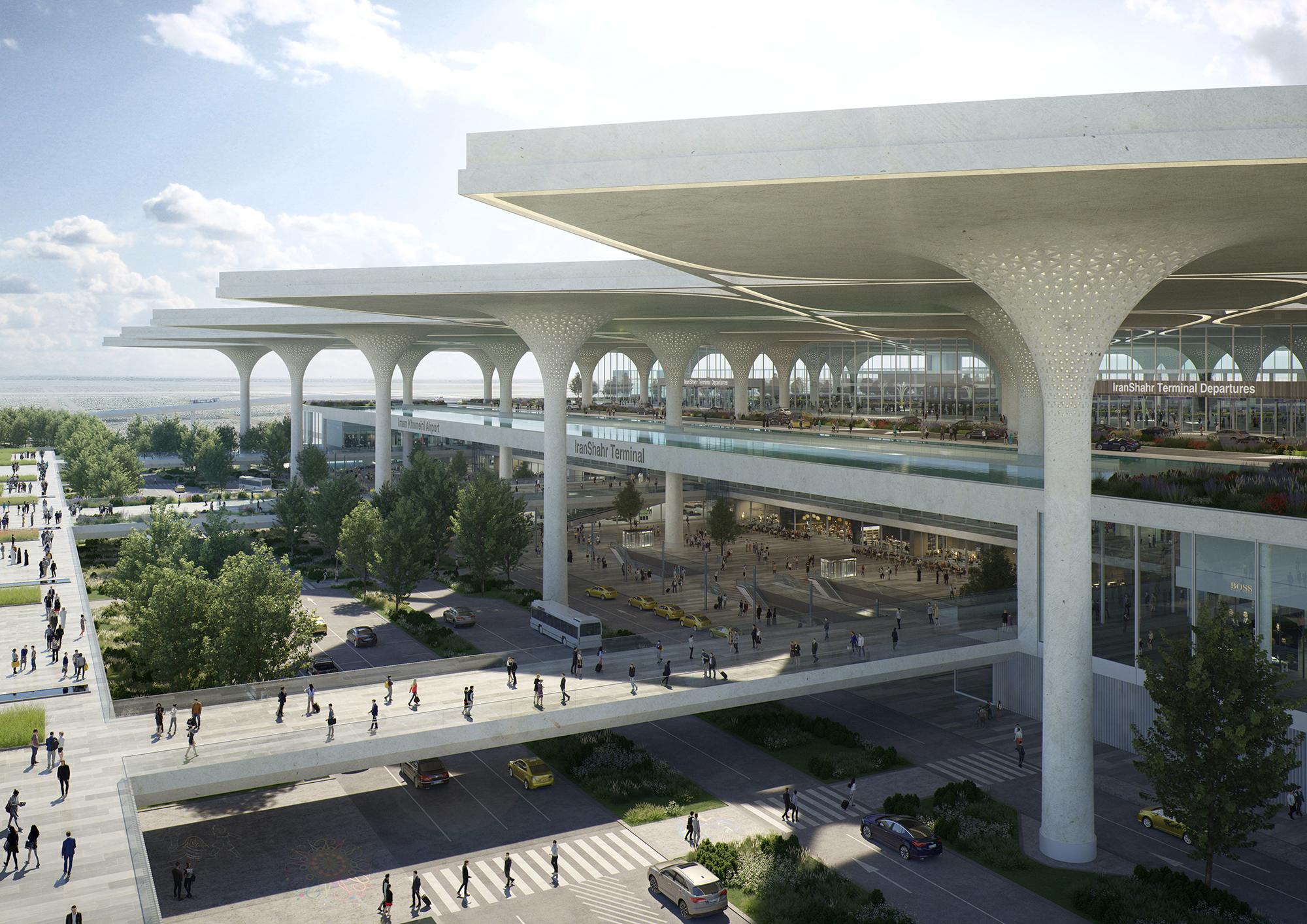
The proposal from Hadi Teherani Architects is among the 3 shortlisted entries for designing the Iranshahr airport terminal in Tehran. With an annual capacity of 25 million passengers in its initial phase, the terminal is intended to become the heart of future IKIA development in Tehran while establishing a new major air hub along the Europe-Asia corridor.
The proposal relies on the idea of a continuous, expandable modular roof, an omnipresent element in traditional Iranian architecture. It would allow the terminal to easily grow by 30 percent every 10 years, increasing capacity to 55 million passengers per year by 2045.
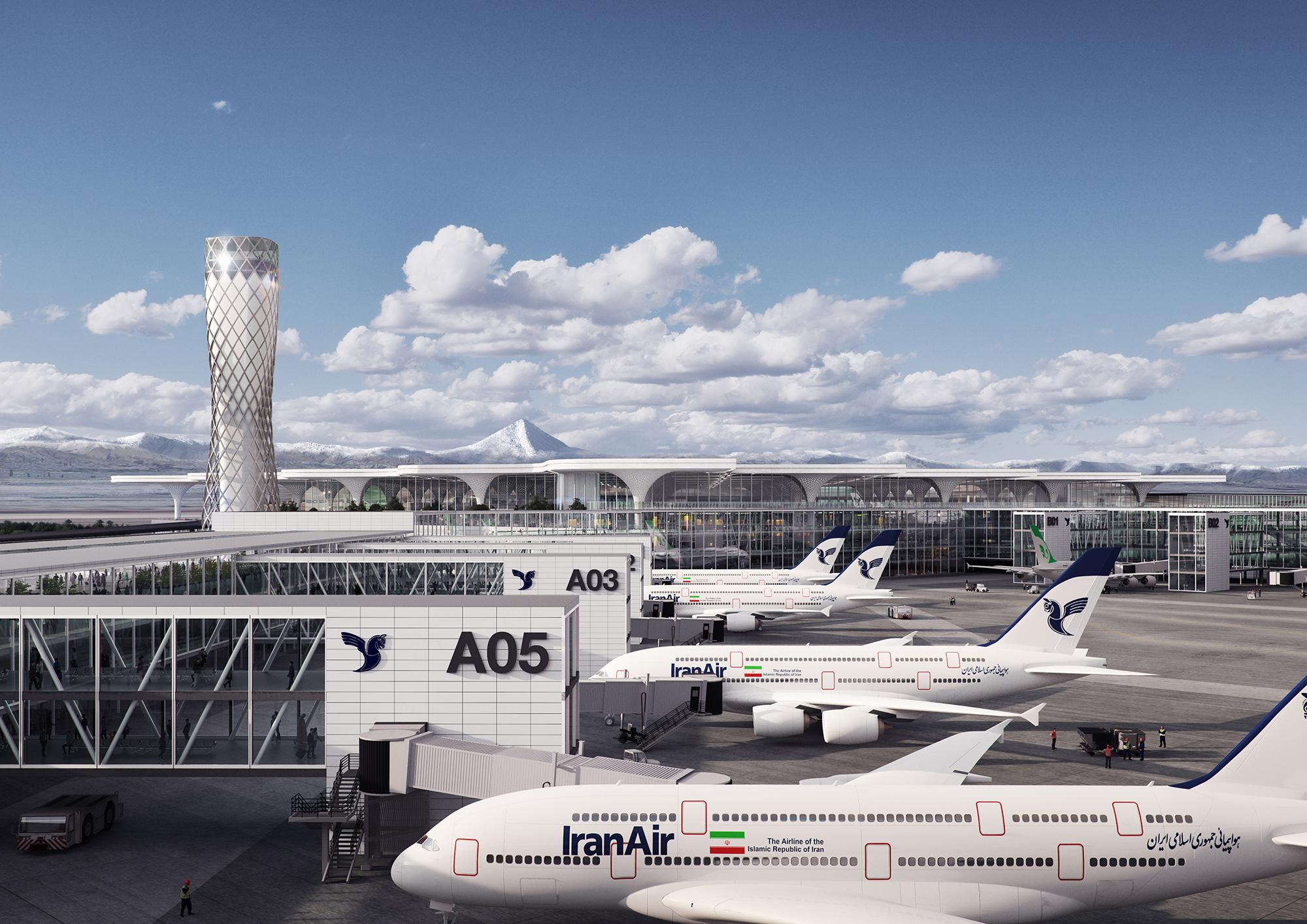
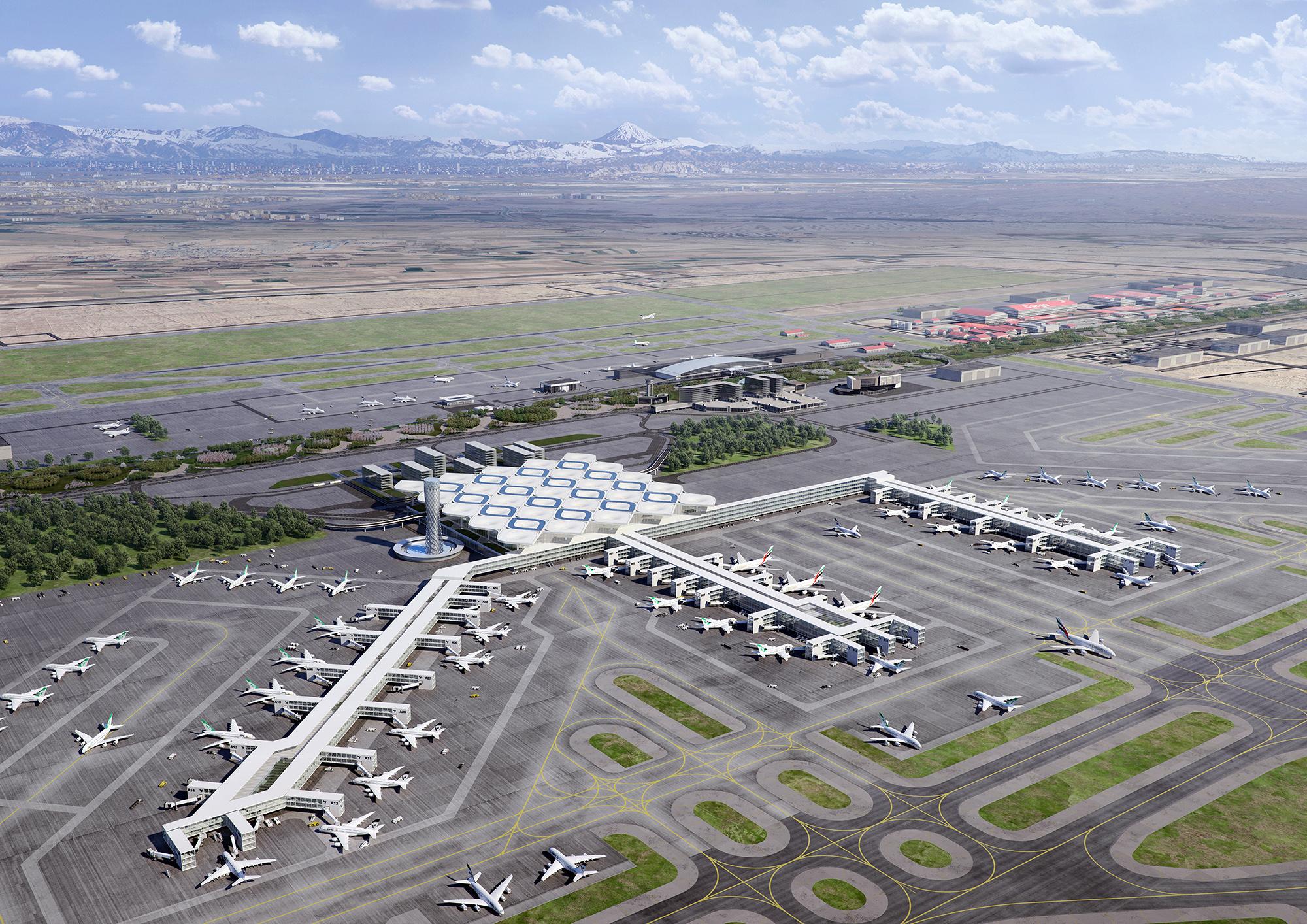
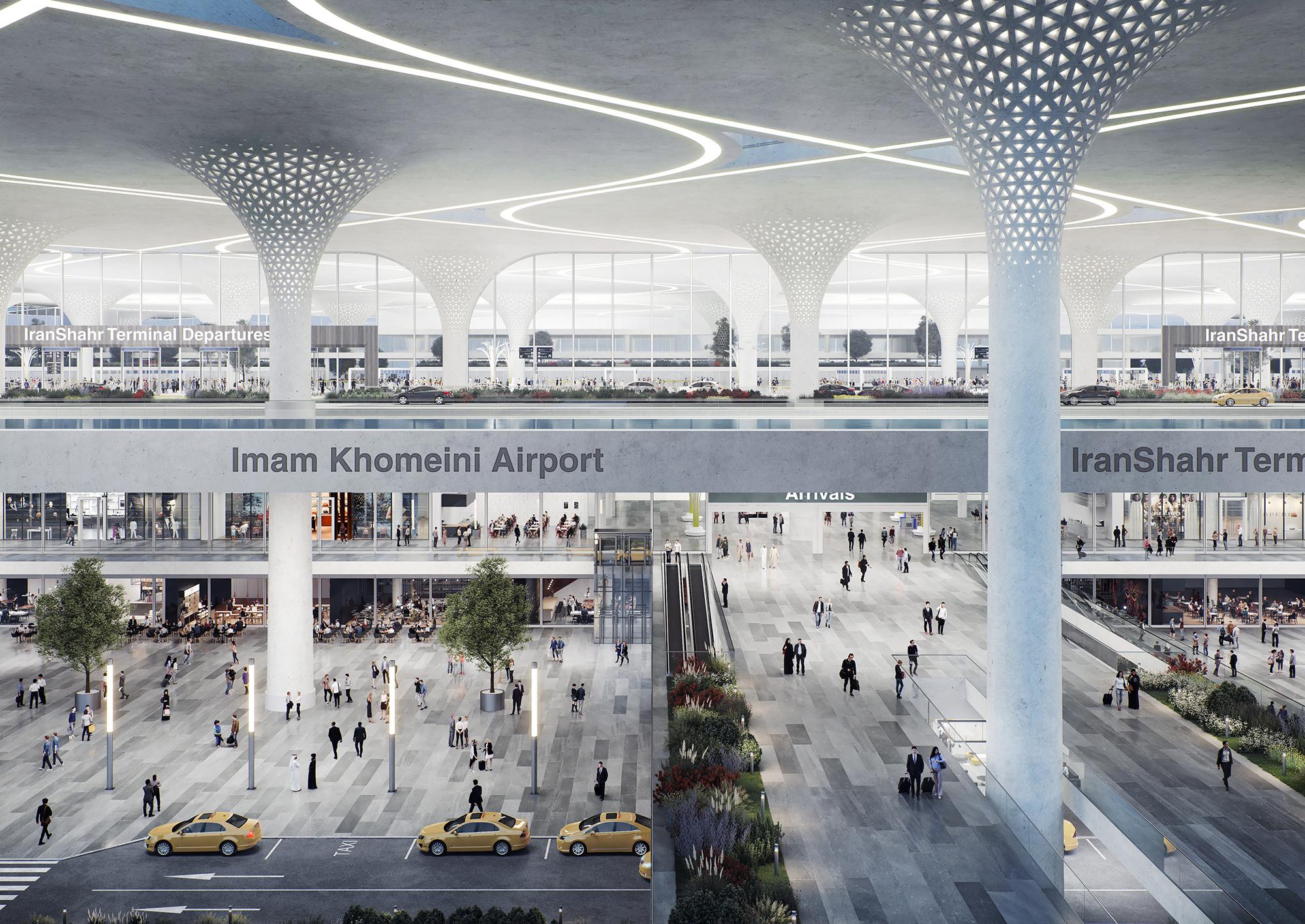
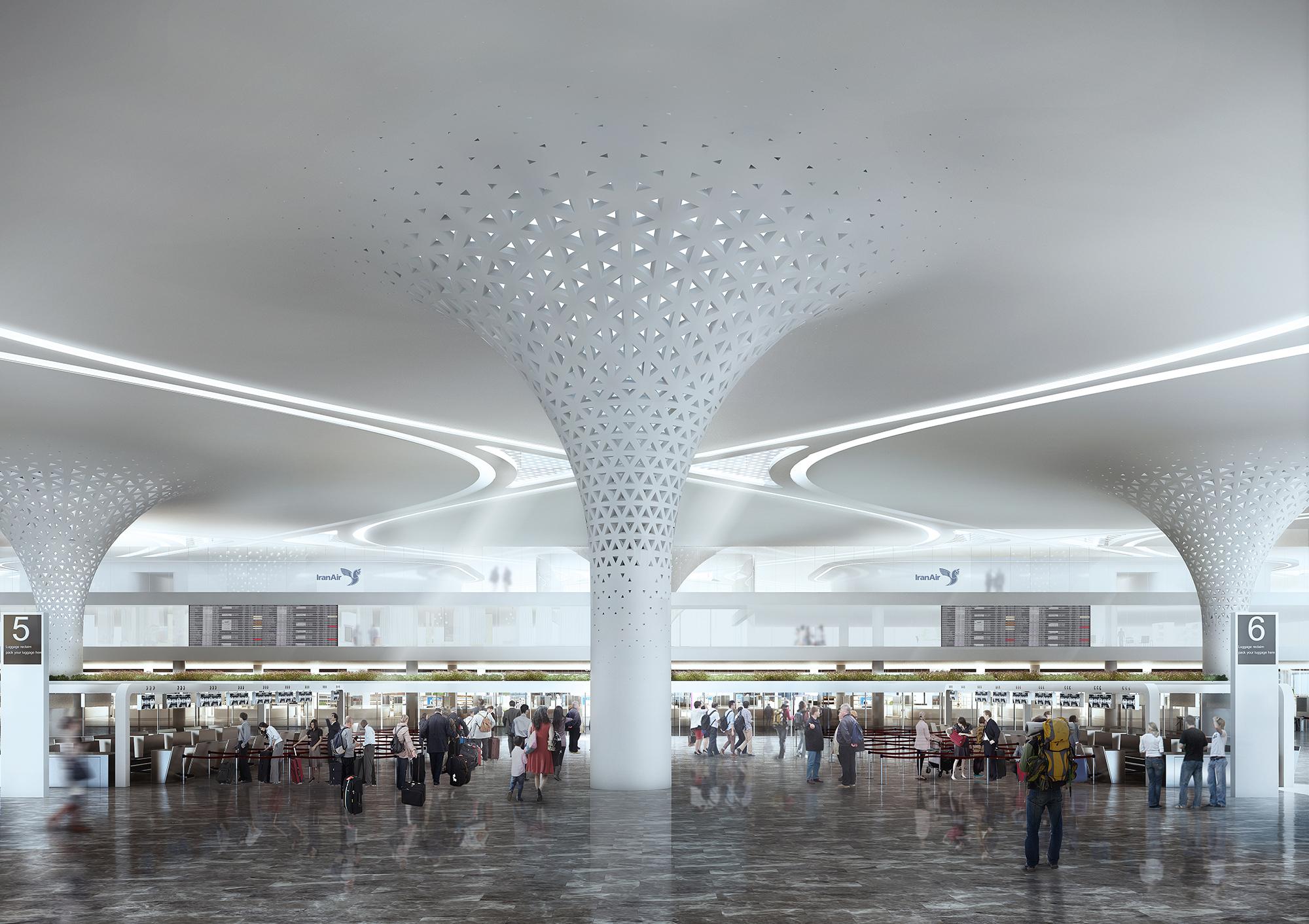
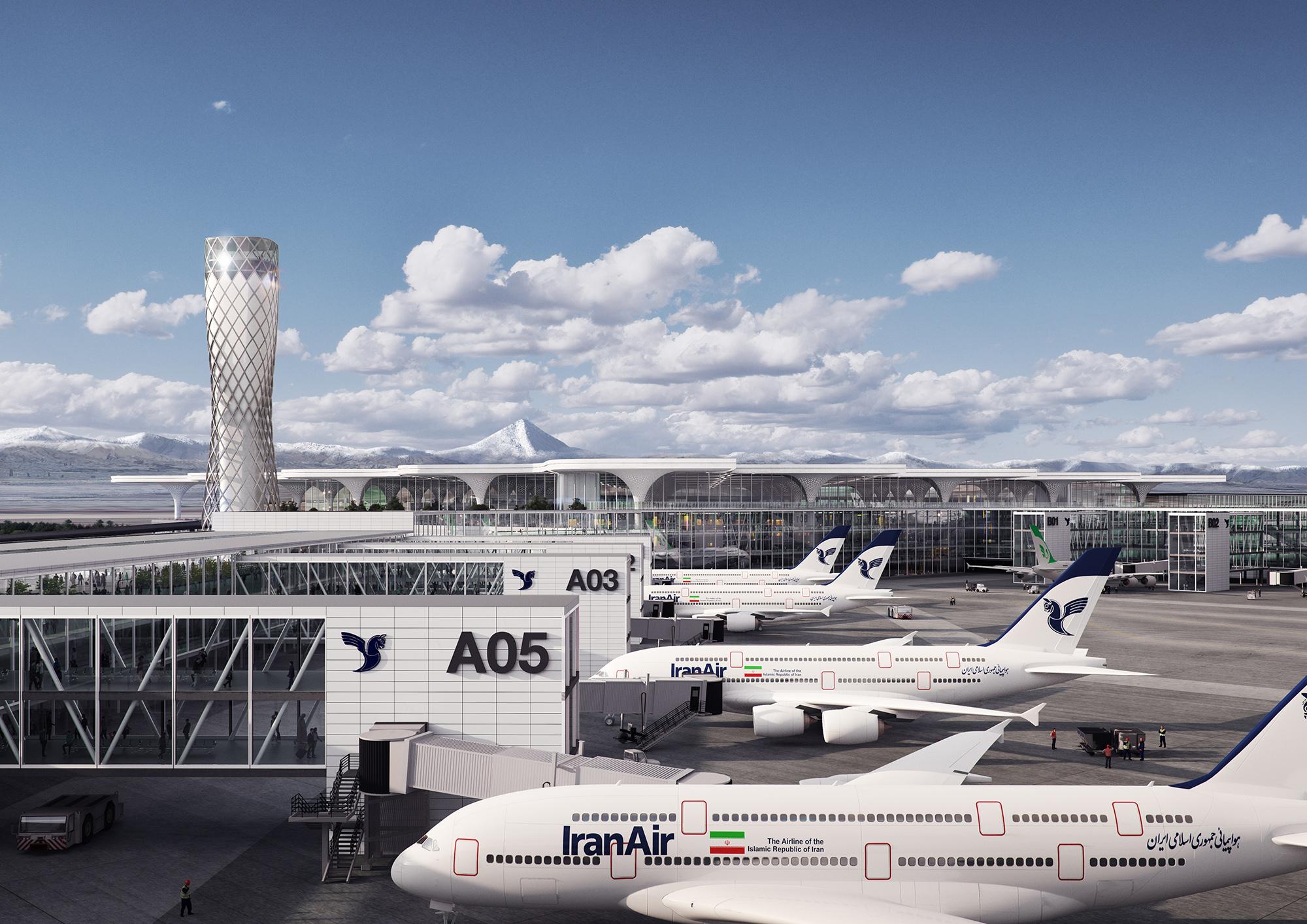
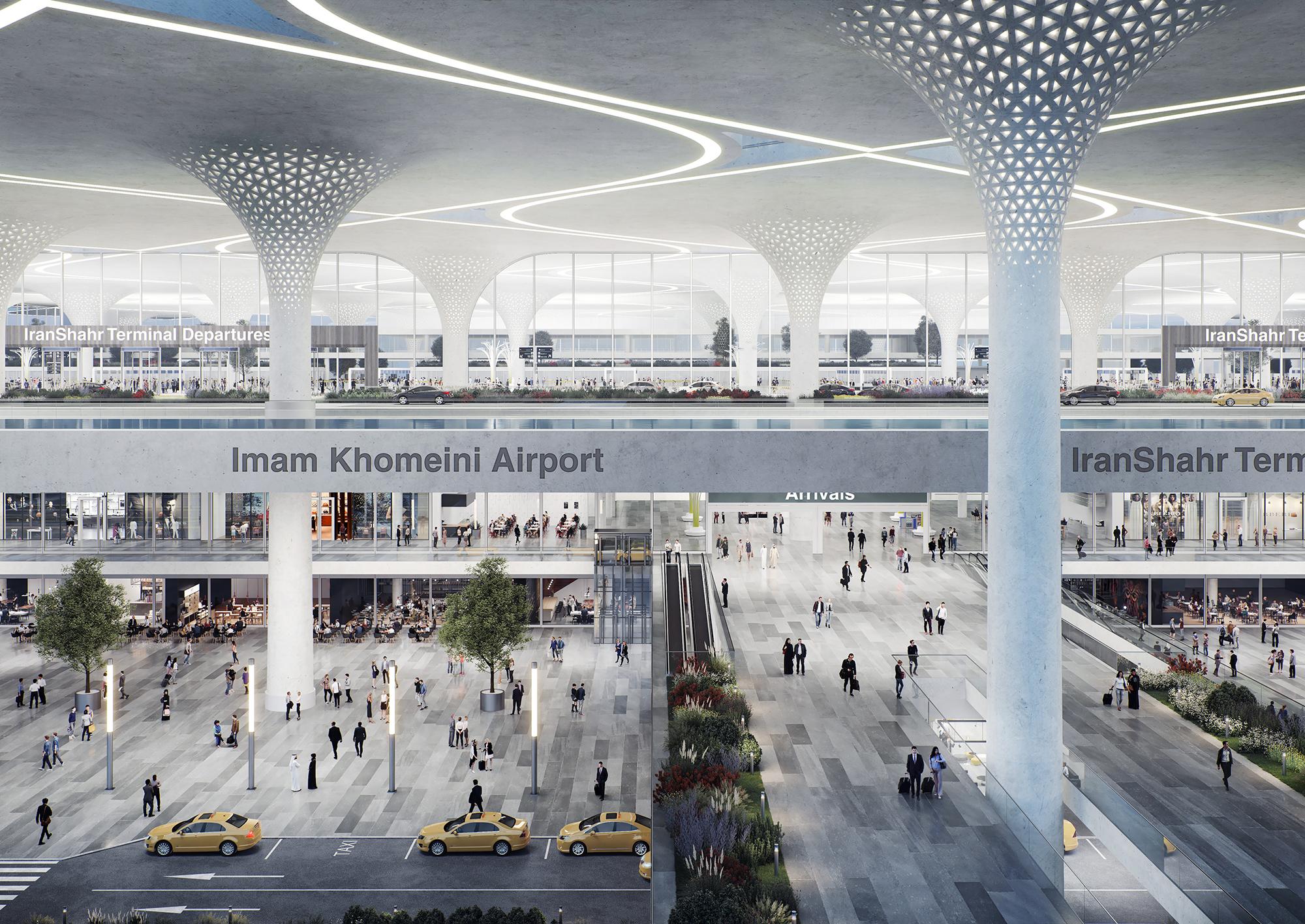
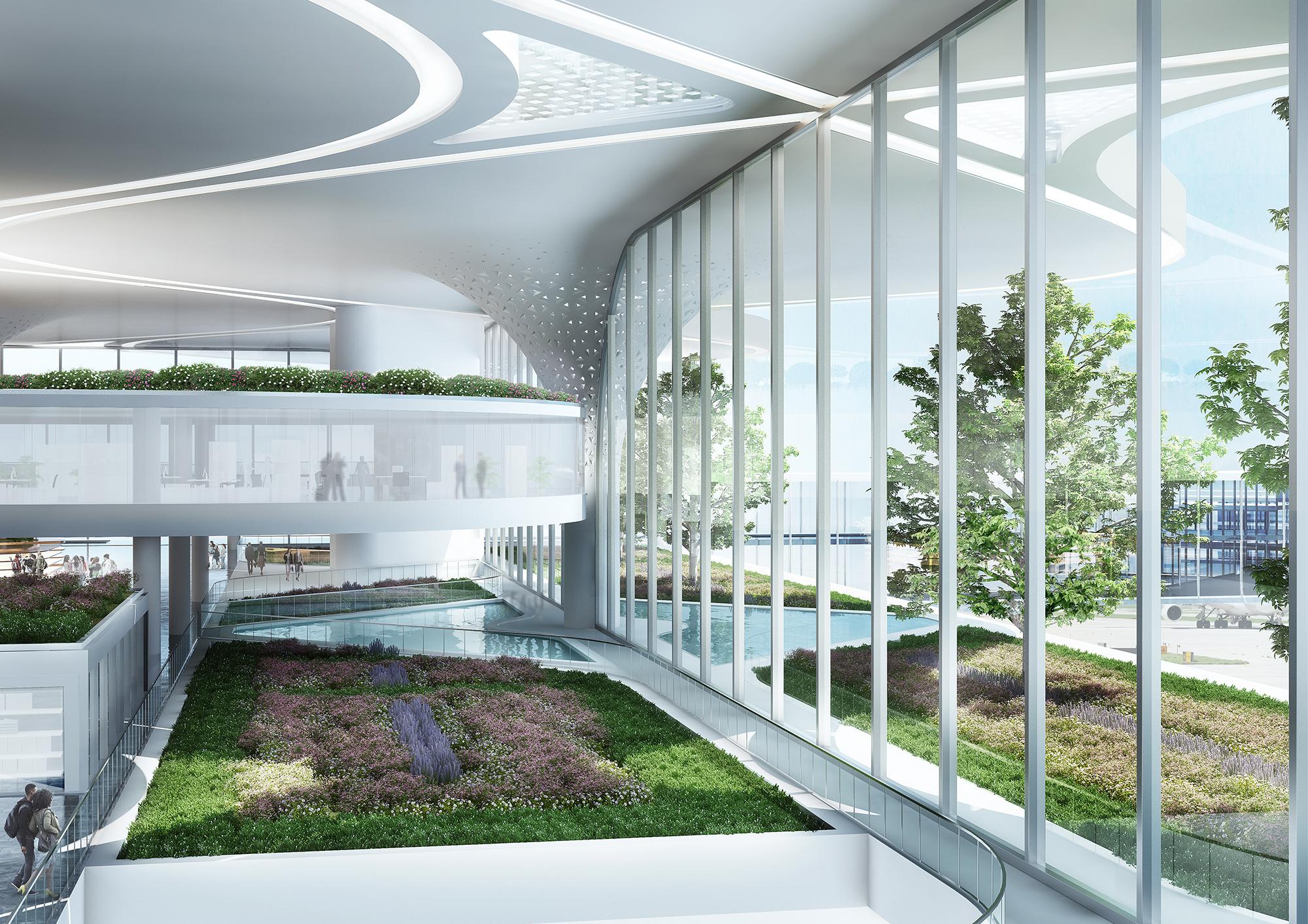
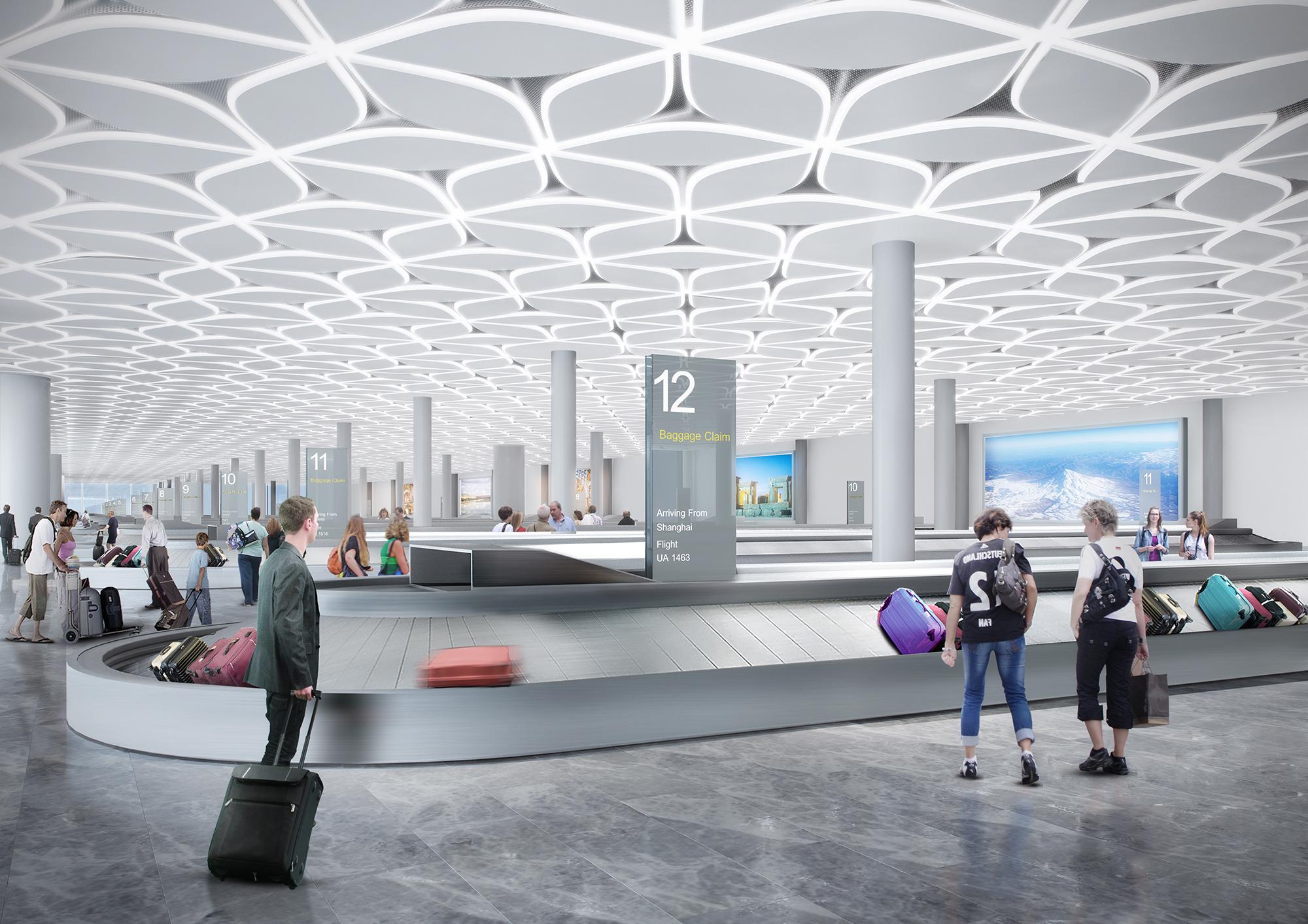
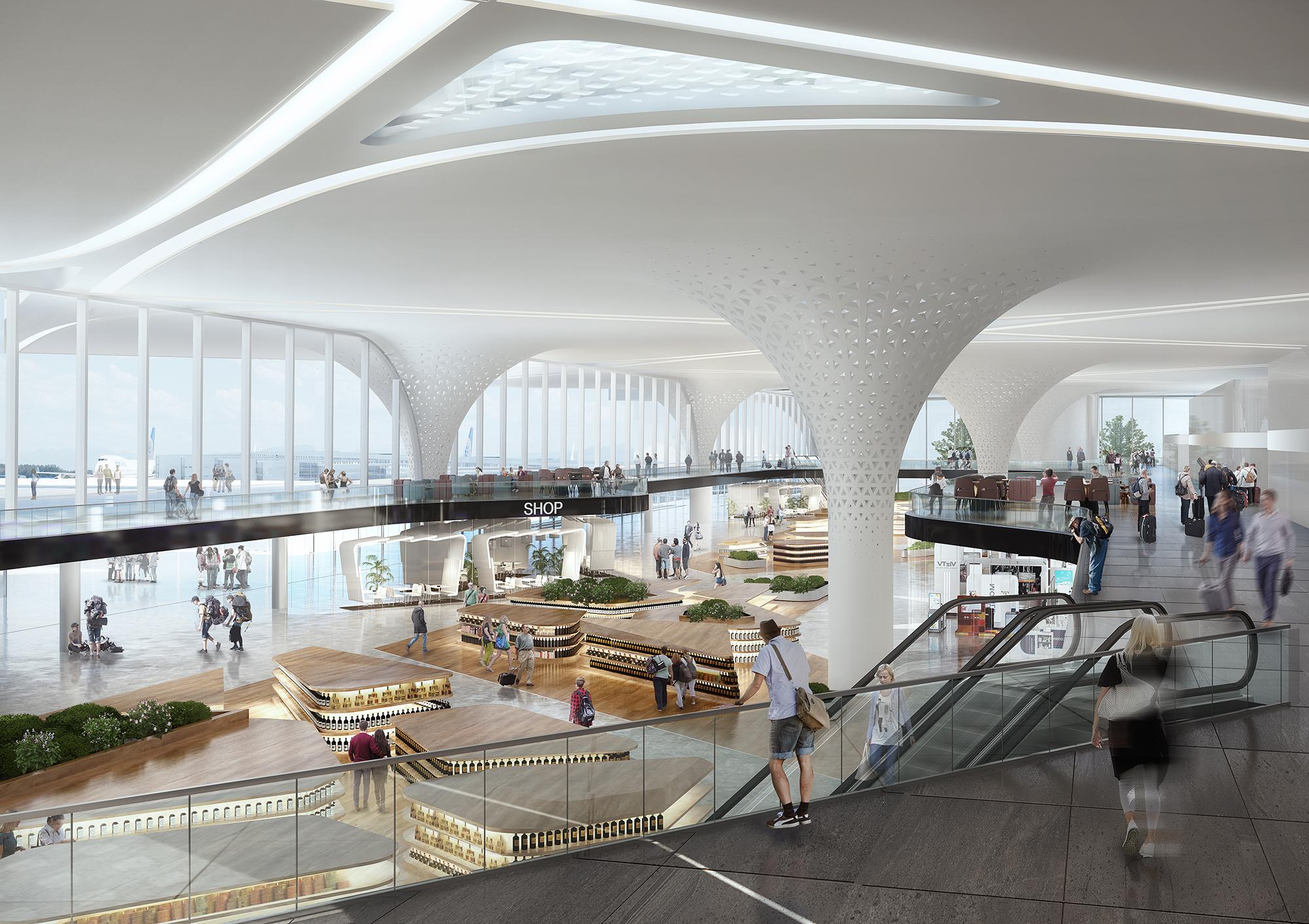
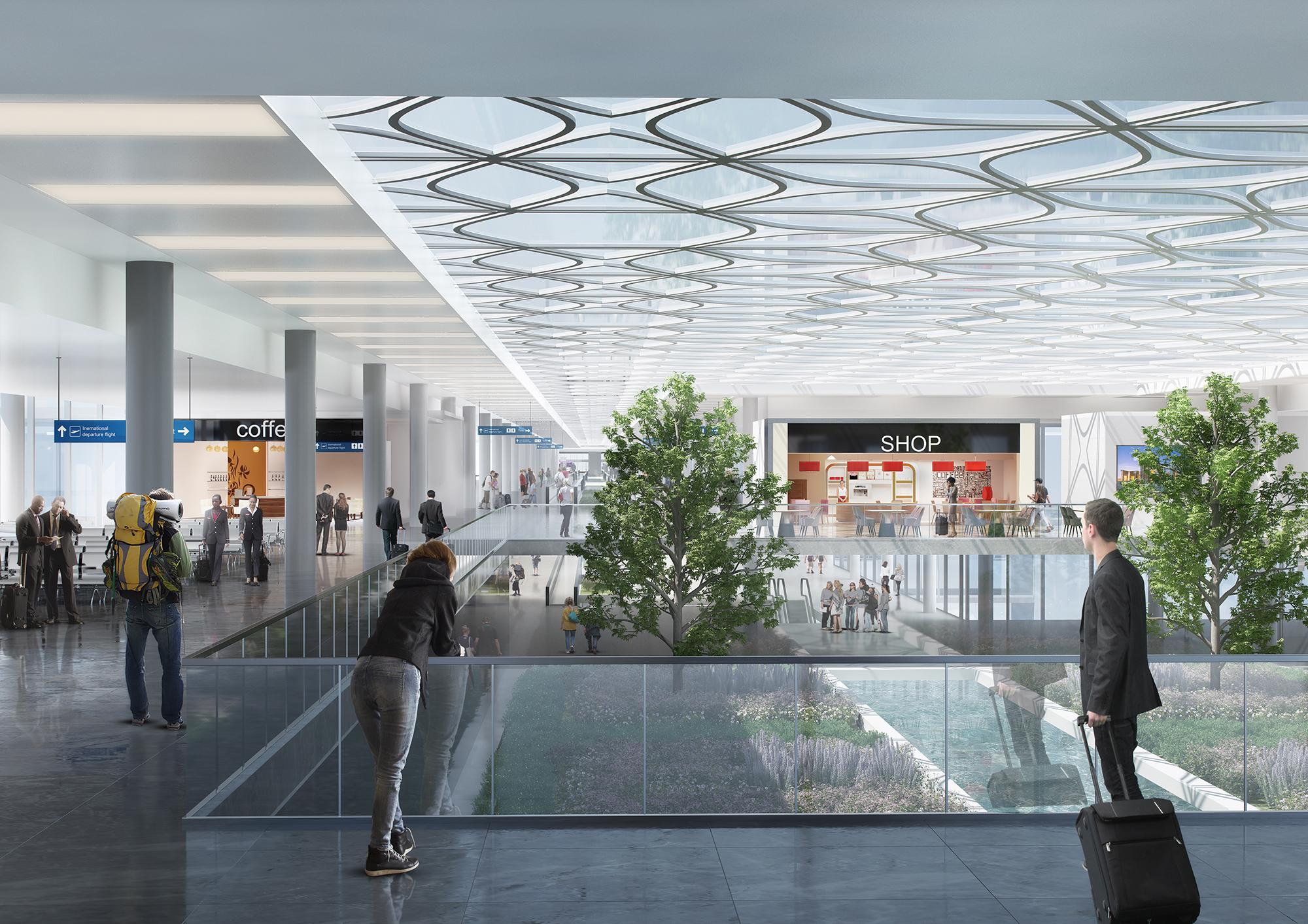
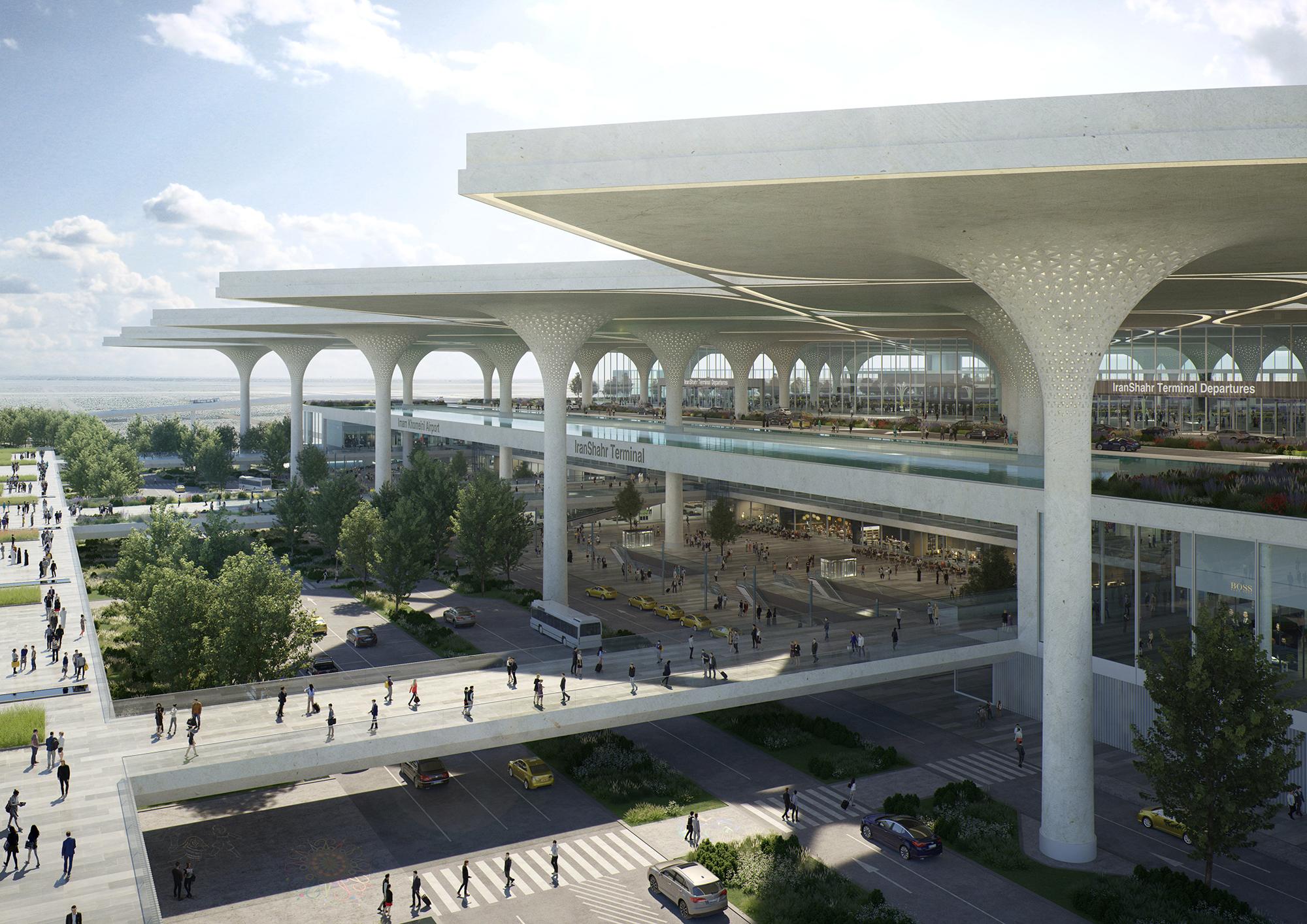
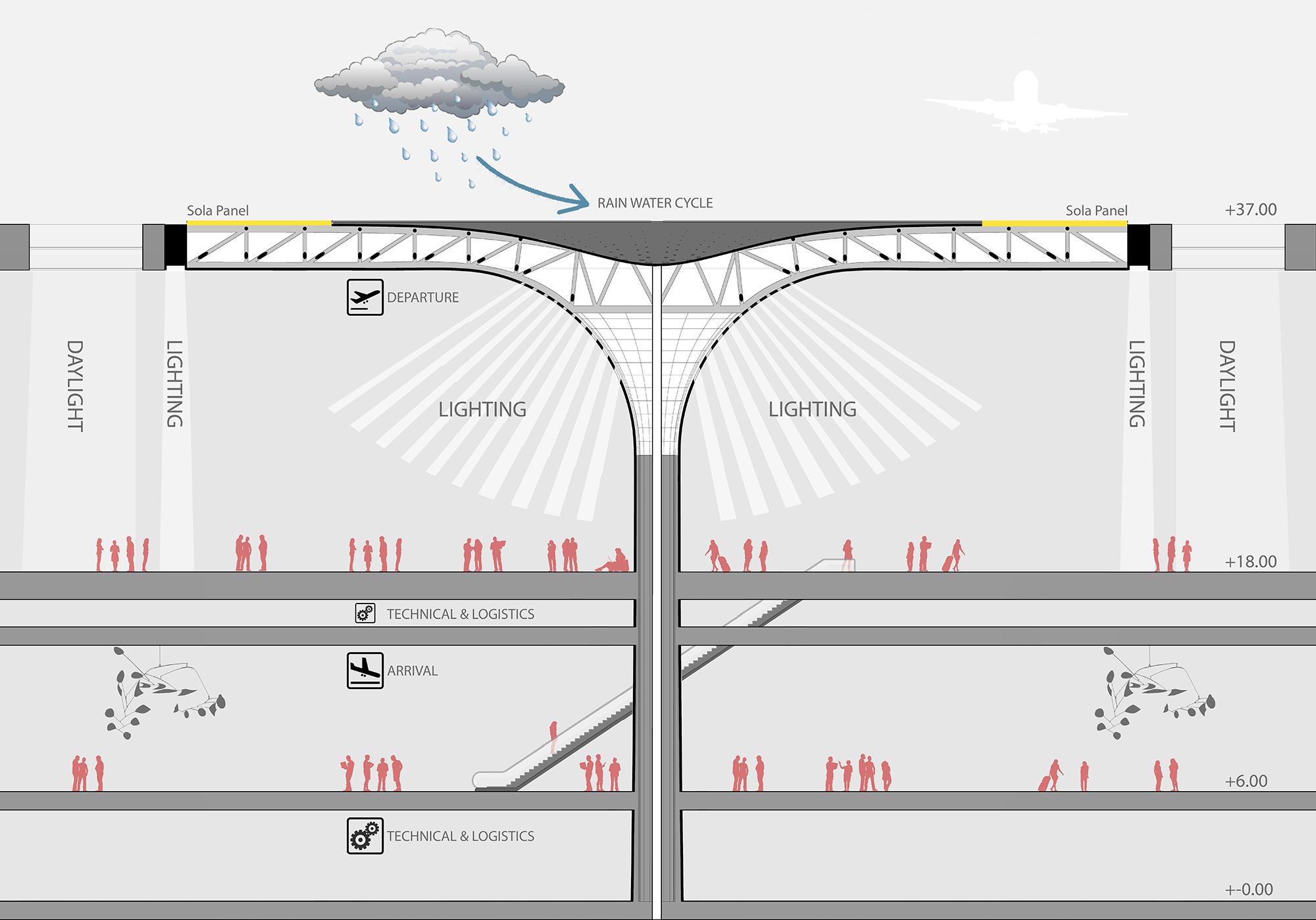
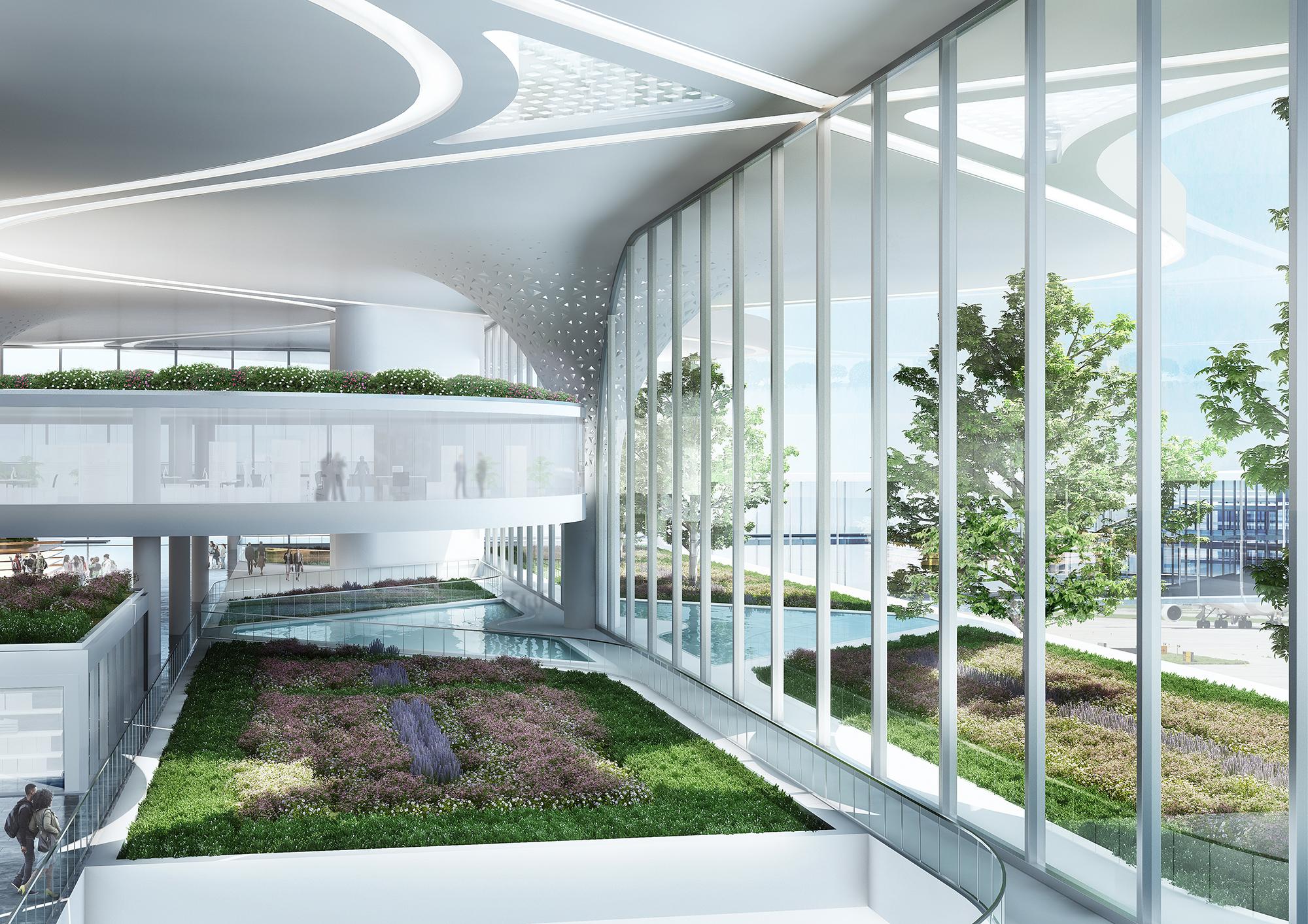
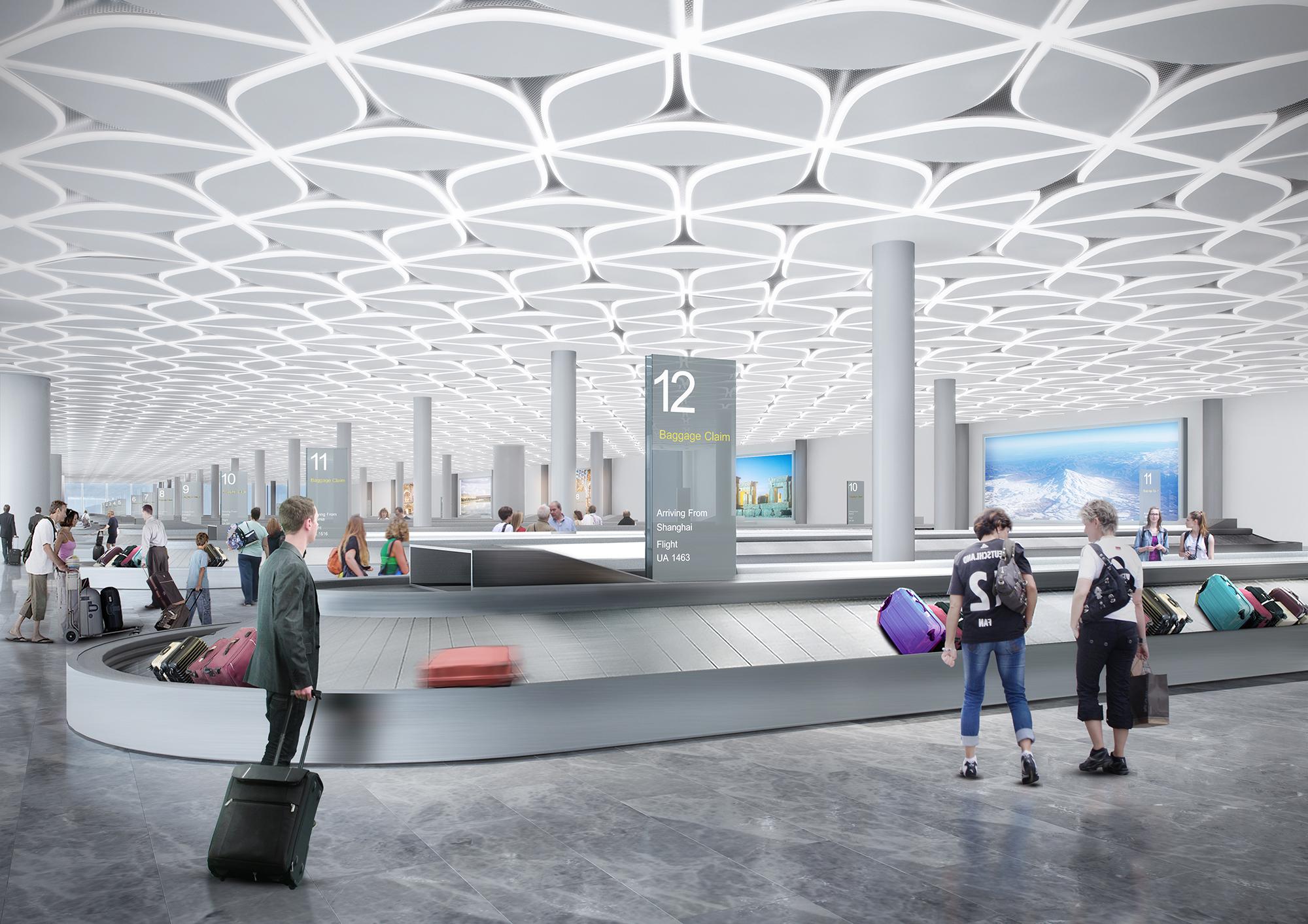
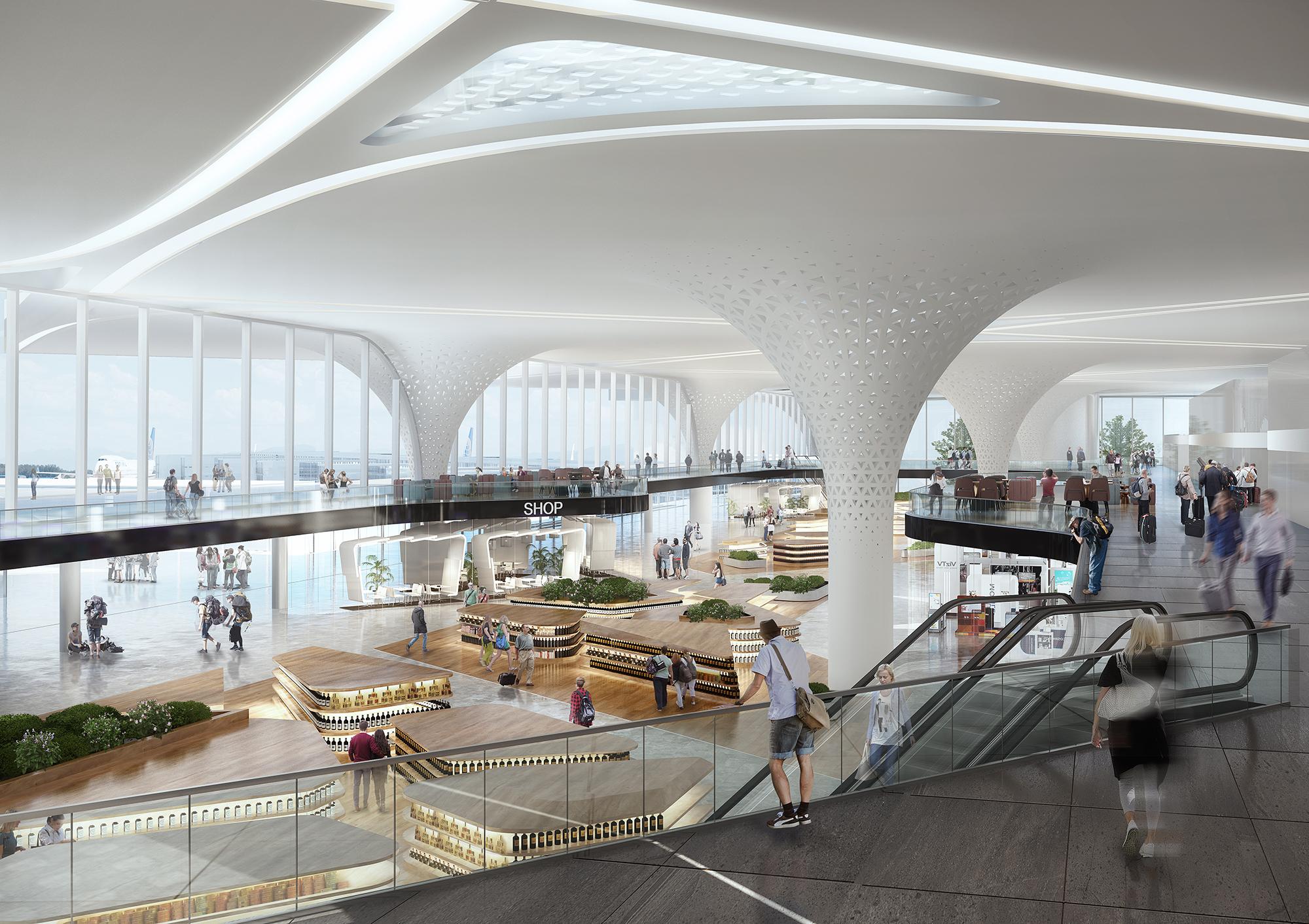
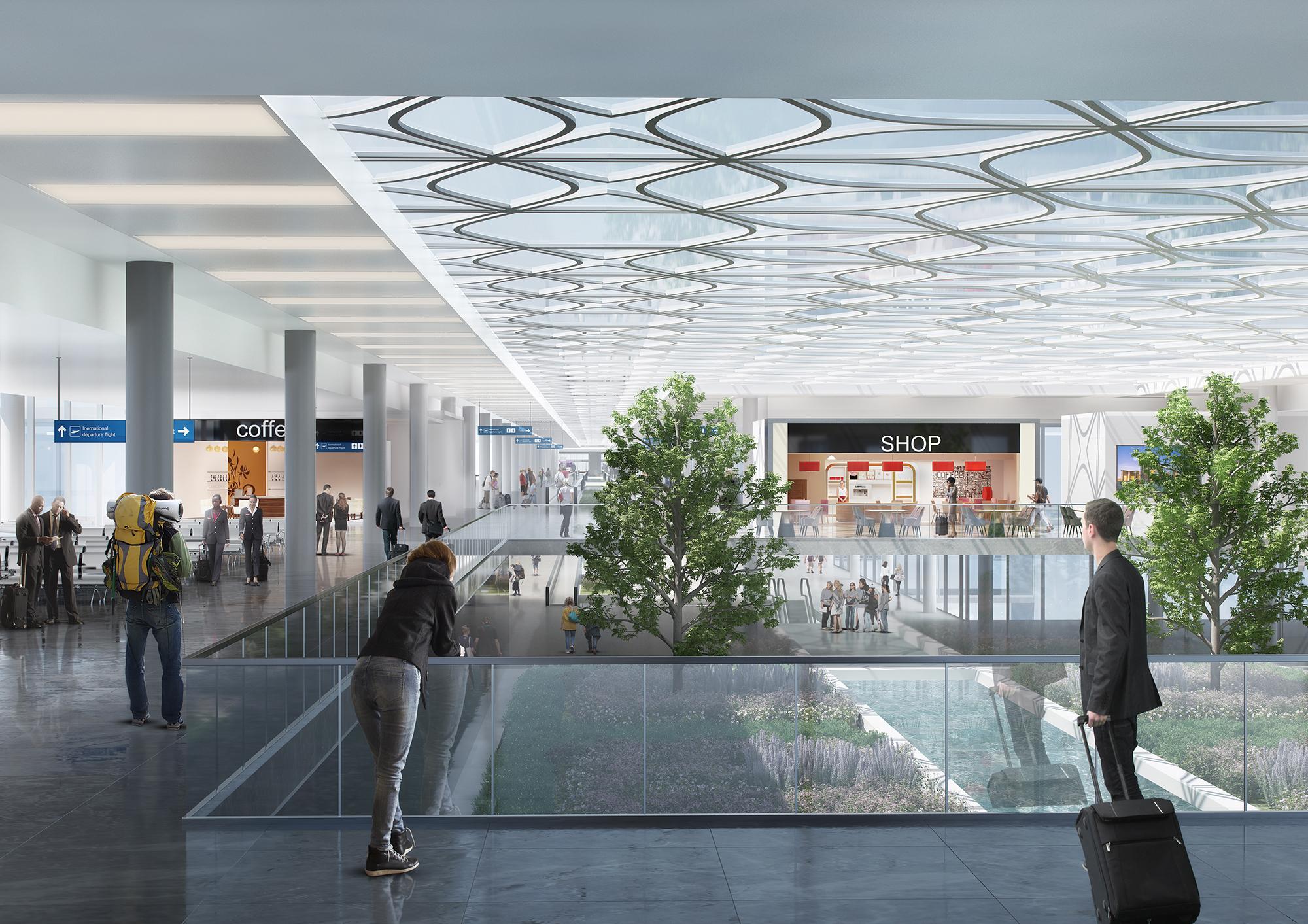
The modular roof canopy is designed based on a diagrid structure standing 37 m aboveground and comprised of 41 uniform cells. 51 x 51 meters large, each cell is carved in the shape of a leaf in alignment with a pattern derived from the interior of the dome at the Sheikh Lotfollah Mosque in Isfahan, which then smoothly transforms into a single cylindrical column at its center. Extension of the roof at its edges would provide shade for the façades, which is essential in light of Tehran’s climate. Nevertheless, the roof canopy is scattered with triangular openings positioned at the opposite corners of each module. They bring a controlled amount of daylight into the departure hall while preventing direct sunlight from hitting interior surfaces. Fully glazed façades on all sides of the terminal enable users to have a better visual connection with both land and sky.
Along the 10-km exclusive access to the terminal for cars at the front, a geometry similar to the roof is used as a base to develop a linear public park. The park subsequently extends inside the terminal to create mirroring gardens along the façades at the sides.
The overall approach aims at providing maximum transparency within the modular organization of the space while maintaining a powerful connection to the Iranian architectural heritage.
Project Factsheet
Amir Khazan, Ludwig Ebert, Hamidreza Edalatnia, Kim Fenk, Christoph Woop, Carl Christian Wentzel, Luis-Eloy Sereno Hernandez, Vahid Karamad, Mahsa Asaei, Christian Bergmann, Nicola Sigl, Vivien Heindorf, Nora Varga